
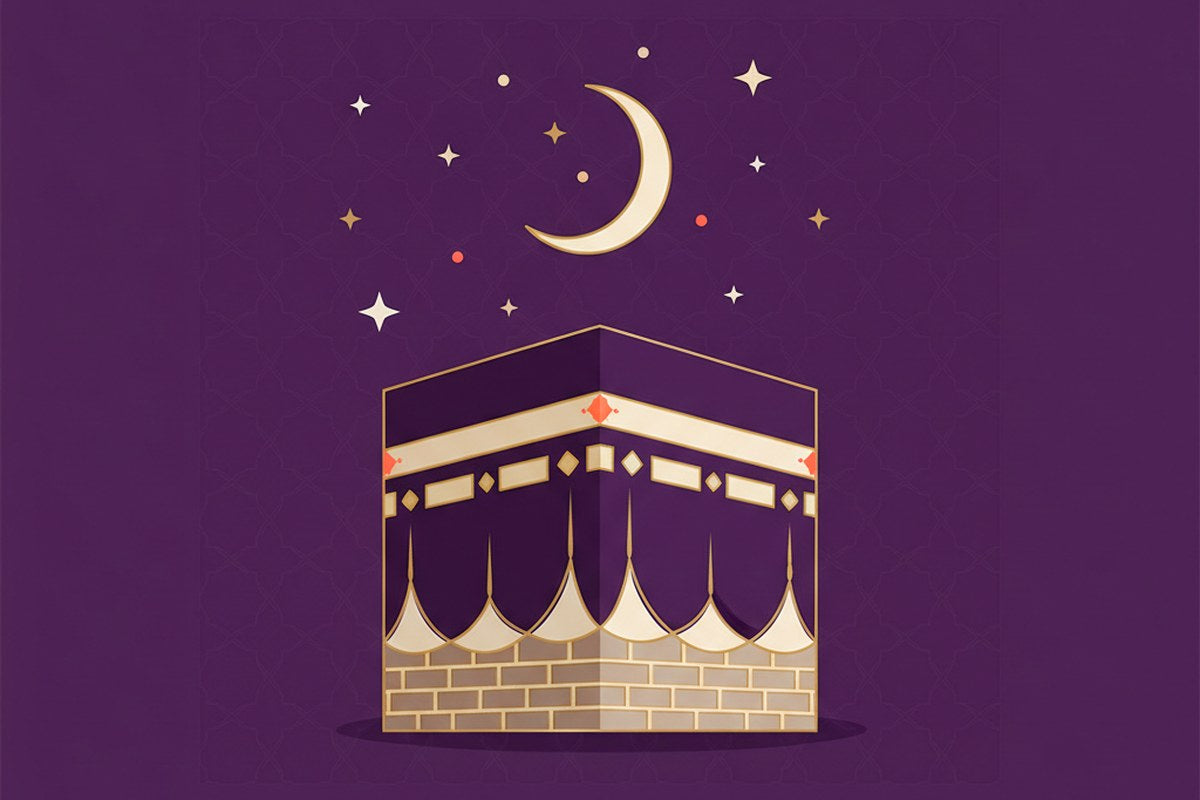
Have you ever wondered what the deep meaning of pilgrimage to Mecca is? It is one of the five pillars of Islam, a sacred tradition that dates back millennia.
In this article, we will unveil the rituals, the symbols, and the hidden spiritual message behind this religious practice. An exciting spiritual journey awaits you.
Key Points to Remember
- The pilgrimage to Mecca, or Hajj, is one of the five pillars of Islam and has profound significance for Muslims around the world.
- The Hajj is an The Meaning and Purpose of the Pilgrimage to Mecca
The pilgrimage to Mecca, or hajj, is much more than a simple religious ritual: it is a act of profound devotion and of spiritual purification for Muslims worldwide. Nicknamed the The main purpose of this practice is to strengthen the faith of the believers and allow them to connect with their Creator at a deeper level. During the hajj, pilgrims perform various symbolic rituals, many of which date back to the time of the Prophet Ibrahim and his son Ismaël who began the construction of the Kaaba, the sacred House of Allah.
Each of the rituals performed during the hajj has a particular significance and contributes to achieving the deeper meaning of the pilgrimage. The faithful enter into a state of consecration called ihram where they demonstrate their intention to purify their soul and focus on their devotion to Allah.
The performance of the hajj is an opportunity for the faithful to enrich themselves spiritually, to detach themselves from worldly attachments and to renew their commitment to Allah. It is also a way for Muslims to affirm their unity and reject all sectarianism, thus emphasizing the ultimate goal of the pilgrimage - the unification of the Muslim community under the banner of monotheism.
 Discover →To prepare for the HajjAll you need to know about the hajj & the omra - Tawbah - Tawbah Editions12.00 €
The Secrets and Symbols of Pilgrimage
Every rite of pilgrimage to Mecca is laden with secrets and symbols. The foremost among them is the Tawaf, which consists of circling the Kaaba seven times. This is an act that symbolizes the unification of humanity under a single faith, as all pilgrims perform this movement together, without distinction of race, gender, or social status.
Highlighting the equality of believers before Allah, it is also a demonstration of love and admiration for God.
Next comes the Sa'i, a symbolic act in which pilgrims travel seven times the distance between the hills of Safa and Marwa. Performed in commemoration of Hagar's courage and determination in her desperate search for water for her son Ismail, this act represents the trial of the desert to attain a divine objective.
Finally, the stoning of the three pillars (Jamaraat) symbolizes the rejection of satanic temptations. This act is performed in remembrance of the gesture of Prophet Ibrahim, thus demonstrating spiritual strength in resisting evil.
It is therefore undeniable that each ritual of the pilgrimage to Mecca is unique and contains sacred symbols that strengthen the religious significance of the Hajj in the hearts of Muslims.
How the Hajj Unfolds in Mecca
The Hajj in Mecca is a unique process that requires devotion and endurance. Here are the different stages of this major pilgrimage:
- The pilgrim must first enter into a state of consecration, known as ihram. This is a state of spiritual purity accompanied by certain ritual garments.
- Once in ihram, the pilgrim heads toward the Kaaba, the sacred House of Islam, where he performs the tawaf: a procession around the sanctuary seven times.
- After the tawaf, the pilgrim performs the sa'i between the hills of Safa and Marwa, also seven times.
- The pilgrims then go to Mina to spend a night in prayer.
- The following day is devoted to the stay on Mount Arafat, considered the main event of the Hajj - it is said that at this moment all sins are forgiven by Allah.
- After spending the day on Mount Arafat, the pilgrims proceed to Muzdalifah to collect stones for the Jamarat ritual at Mina.
- The Jamarat consists of throwing these stones at three pillars symbolizing Satan; it is a sign of rejection of evil.
- Finally, all Muslims participating in the Hajj participate in the celebration of Eid al-Adha and perform a final circumambulation (Tawaf) around the Kaaba before completing their pilgrimage.
Literary and Historical Definition of Pilgrimage
The pilgrimage to Mecca, also known as the Hajj, is an event of great importance in the life of a Muslim. It is governed by principles and traditions that are deeply rooted in literature and history.
Literally, the word "hajj" means to visit a place in a group and make round trips. Historically, pilgrimage dates back to the time of the Prophet Muhammad, who performed his own pilgrimage to Mecca.
The hajj is an ancient practice that dates back thousands of years. According to Islamic accounts, it was established by Abraham and his son Ishmael, who were instructed by God to build the Kaaba in Mecca.
The Kaaba is the central point of the pilgrimage and is considered the sacred house of God. The hajj is therefore a celebration of faith and obedience to God, as well as a reminder of the bond between Muslims around the world.
Over the centuries, the pilgrimage has evolved and developed to become the massive and organized event we know today. Millions of Muslims from around the world travel to Mecca each year to perform the specific rites of the hajj.
This includes dressing in a special garment called the ihram, performing ritual tasks such as circumambulating the Kaaba, spending a night in the valley of Mina, and traveling to the plain of Arafat, where believers offer special prayers and seek God's forgiveness.
The pilgrimage to Mecca has profound literary and historical significance for Muslims around the world. It is a reminder of the history and tradition of Islam, as well as an opportunity to renew one's faith and draw closer to God.
By accomplishing.
Muhammad and His Pilgrimage to Mecca
Muhammad, considered the Messenger of Allah, was born in Mecca and played a central role in the establishment of Islam. His pilgrimage to Mecca, known as the Hajj, holds particular importance for Muslims throughout the world.
As a prophet, Muhammad performed his pilgrimage to Mecca at the age of 63, one year before his death. This pilgrimage was a crucial moment in his spiritual life and strengthened his bond with Allah.
For Muslims, following in the footsteps of Muhammad by performing the Hajj is a way to draw closer to Allah and follow his example.
Muhammad's pilgrimage to Mecca is also important from a historical and symbolic perspective. It showed the faithful how to perform the Hajj correctly and established the practices that are still followed today.
His pilgrimage was a moment of great devotion and intense spirituality, making it a model for all Muslims who undertake the Hajj.
Today, millions of Muslims from around the world travel to Mecca each year to perform their own pilgrimage. They follow in the footsteps of Muhammad and seek to connect with Allah in the same way.
The pilgrimage to Mecca remains a profound and transformative experience for all those who participate in it, offering the opportunity to renew their commitment to their faith and experience a deep spiritual connection.
The Objectives and Deep Meaning of Pilgrimage
Pilgrimage to Mecca, known as the Hajj, is a religious journey of great importance for Muslims around the world. It has several objectives and a deep meaning associated with it.
One of the main objectives of Hajj is to draw closer to God and to strengthen one's spiritual relationship with Him. By traveling to Mecca, pilgrims express their submission to Allah and their commitment to Islam.
Hajj is also an opportunity to purify oneself, both physically and mentally, by detaching from material pleasures and focusing on spirituality. It also encourages unity among Muslims worldwide, bringing together people from different backgrounds and cultures in a single sacred place.
Furthermore, Hajj reminds believers of the fragility of human life and the importance of social justice and equality.
Finally, the pilgrimage to Mecca offers believers a unique opportunity to feel the power and presence of God. By praying at the Kaaba and performing the Hajj rituals, pilgrims experience a closeness to the divine that is often difficult to attain in everyday life.
It is a moment of deep reflection, spiritual transformation, and personal introspection. The profound meaning of Hajj therefore lies in this direct connection with Allah and in the pursuit of purification and spiritual elevation.
The Importance of Detachment and Spiritual Enrichment During Hajj
The Hajj is far more than a simple physical journey to Mecca. It is a profound experience of detachment from material concerns and of the pursuit of spiritual enrichment.
During the Hajj, believers rid themselves of their material goods and possessions, and focus entirely on their relationship with God.
Detachment is essential to achieve the ultimate goal of the Hajj, which is to draw closer to God and to renew one's faith. By leaving behind the distractions of the outside world, pilgrims are able to connect more deeply with their spirituality and find inner peace.
They fully realize the ephemeral nature of material goods and dedicate themselves to seeking a more meaningful relationship with God.
Spiritual enrichment during the Hajj is also very important. During this period, pilgrims participate in various rites and prayers specific to the pilgrimage that strengthen their faith and devotion to God.
They are also in contact with other Muslims around the world, thus sharing unique spiritual experiences.
The Hajj is not merely a physical journey, but a profound experience that allows believers to detach from the material world and enrich themselves spiritually. This allows pilgrims to draw closer to God and renew their faith.
Detachment and spiritual enrichment during the Hajj are therefore essential for Muslims seeking a deeper connection with their spirituality.
Unity and the Rejection of Sectarianism During the Pilgrimage to Mecca
The pilgrimage to Mecca is far more than a simple gathering of believers. It is an opportunity where Muslims from all over the world come together to recall their unity and their firm rejection of sectarianism.
No matter our origin, our culture, or our social status, we are all equal before God during the Hajj.
When we embark on pilgrimage to Mecca, our white garments, known as ihram, erase all outward distinctions. This reminds us that we are all equal before God and that our unity is far more important than our superficial differences.
We came with a single objective: to worship and draw closer to God.
During the Hajj, we also realize the importance of solidarity and sharing. Pilgrims help one another, support and respect each other, regardless of their ethnic origin or native language.
It is a true example of human unity in its diversity.
The pilgrimage to Mecca thus teaches us to reject sectarian divisions and to seek unity. It is a privileged moment where millions of Muslims come together to testify to their love for God and their mutual respect.
It is a deeply enriching spiritual experience that reminds us that we are not alone in our religious quest and that we are linked by a shared faith.
Conclusion: The Importance of the Heart in Fulfilling the Hajj
In conclusion, it is essential to understand that pilgrimage to Mecca goes far beyond a simple physical experience. It is a journey of the soul and the heart, where believers seek to draw closer to God and to renew their faith.
Hajj can only be successfully accomplished if the intention is pure and sincere, and if the heart is open to spiritual transformation. It is this deep connection that gives full meaning to the pilgrimage to Mecca.
FAQs
2. Who can perform the pilgrimage to Mecca?
The pilgrimage to Mecca is open to all adult Muslims who are physically and financially capable of performing it. There are no restrictions based on race, ethnicity, or social status.
3. What are the rituals of pilgrimage to Mecca?
The rituals of pilgrimage to Mecca include circumambulation around the Kaaba, prayers at the sacred mosque of Masjid al-Haram, staying in Mina and Arafat, stoning the pillars symbolizing Satan, and shortening one's hair.
4. What are the blessings and rewards of pilgrimage to Mecca?
Pilgrimage to Mecca is considered one of the most venerated and meritorious acts in Islam. Believers believe that it purifies sins, strengthens their relationship with Allah, increases their spirituality, and offers them an opportunity to ask for forgiveness and make special prayers. Moreover, pilgrimage to Mecca is also a means of solidarity and unity among Muslims throughout the world.
📚 Also read
۞−5 % off the entire library with the code BLOG5
Valid throughout the site, with no minimum purchase — our thanks to our blog readers.
Discover the selection


